

Building confidence, alignment and leadership capability through organisational change
When West Midlands Employers (WME) first began working with Sandwell Council in 2025, the focus was not on rolling out large-scale programmes or introducing sweeping organisational change. It started in a much more grounded place.
The HR team was navigating a period of significant transition. Roles were evolving, expectations were shifting and, for many, there was a sense of both opportunity and uncertainty. They were being asked to step into a more strategic, visible and influential role across the organisation, while simultaneously managing the personal and professional impact of change themselves.
That combination isn’t unusual. In many organisations, HR is expected to lead and support others through change while still making sense of it internally. The risk, if unsupported, is that confidence dips alignment weakens and the very team expected to enable change feels least equipped to do so.
WME ran a series of facilitated sessions and change workshops that allowed the HR team to step back from the immediacy of day-to-day pressures and consider what the changes meant in practice.
These sessions explored not only the structural and operational implications, but the emotional and relational impact. They provided the opportunity to shape a clearer sense of collective identity and what the future might mean for them. Alongside this, there was a particular focus on the HR Business Partners. As expectations of the role started to change, so did the need for clarity and confidence. Moving from a historically transactional approach to one that is insight-led and influential is not simply a change in job description. It requires a different mindset, a different set of conversations and, often, a different level of confidence in working with senior stakeholders.
Head of HR Nicki Gobran recognised this risk.
“We knew we couldn’t ask managers across Sandwell to approach performance differently if HR didn’t first feel confident and aligned in its own role.”
Supporting the shift from transactional HR to strategic influence
WME engaged one of their trusted associates, Ann-Marie Barlow to work with the HR BPs to explore what that shift might look like in practice. Rather than positioning this as a formal training intervention, the approach Ann-Marie took was deliberately fcilitative.
Sessions created opportunities to reflect on real experiences, to share challenges openly and to build a stronger sense of collective purpose.
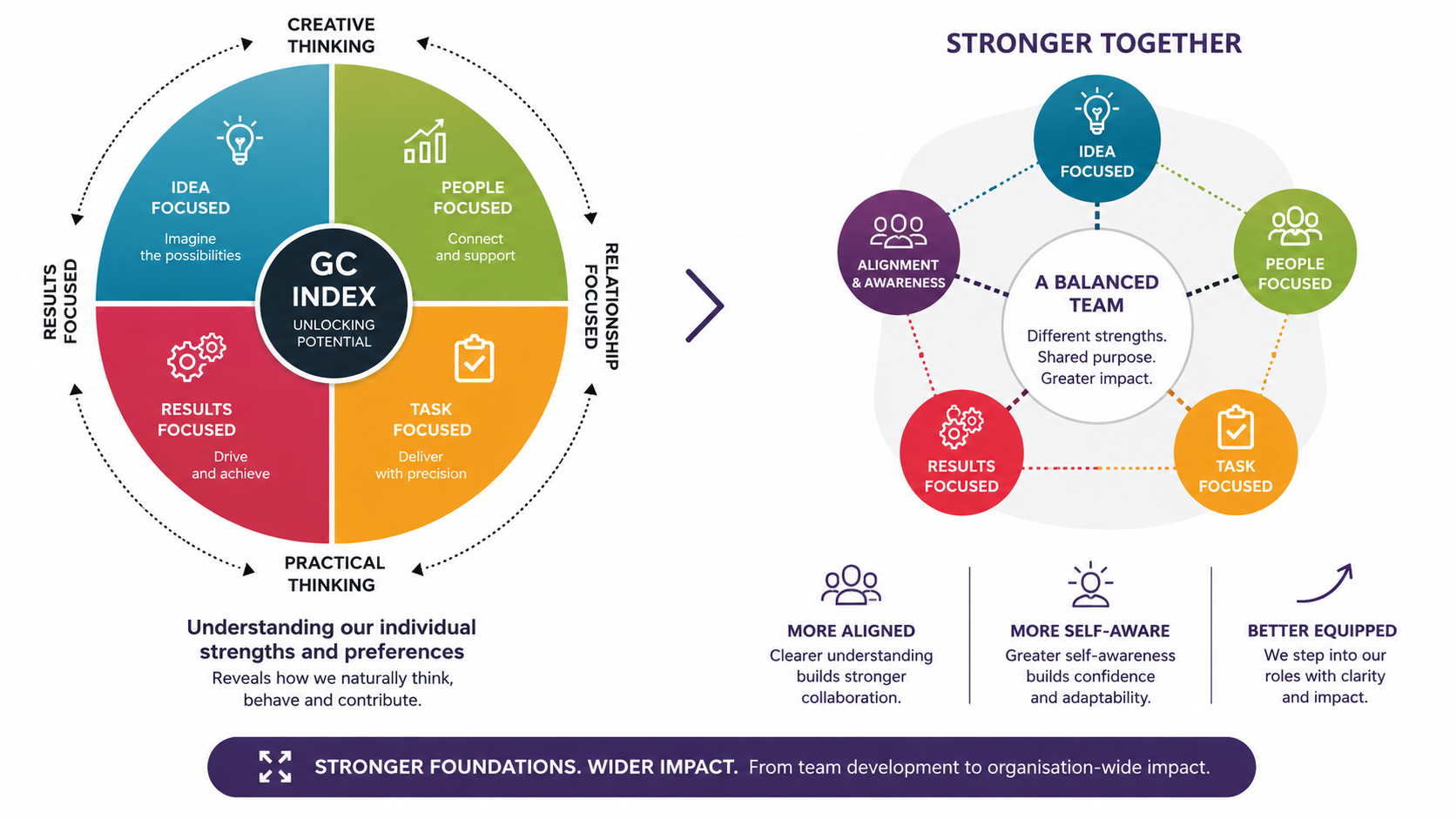
WME recommended the GC Index and this added another dimension to the work, helping individuals and the team understand how they each make an impact and how those different contributions come together.
What has begun to emerge is a team more aligned, more self-aware and better equipped to step into its evolving role. It was from this point that the work with WME began to extend into the wider organisation.
As conversations (and trust) with HR colleagues deepened, a consistent theme began to surface. Managers across Sandwell were being asked to take a more proactive approach to performance. There was an expectation that issues would be addressed earlier, that standards would be clearer and that conversations about performance would be more consistent and constructive. Again, this is a familiar challenge. Most organisations, including yours, are clear about what they want from managers in principle.
The difficulty lies in translating that into everyday behaviour. Managers often know that a conversation needs to happen. They probably know roughly what needs to be said, But uncertainty about how to approach it, concern about how it will be received, or a desire to avoid conflict can lead to hesitation. Over time, that hesitation allows things to drift and with drift comes consequences. Working closely with the team at Sandwell, WME designed and delivered a pilot focused on building confidence in these crucial moments.
 The ‘Confident Conversations’ workshops were shaped directly by what managers were experiencing. They focused on real situations, not hypothetical scenarios. Participants were encouraged to bring the conversations they had been avoiding and to work through them in a practical and supportive environment.
The emphasis was on clarity, fairness and consistency. Managers explored how to distinguish between performance, behaviour and values, how to ground conversations in evidence and how to respond when discussions become uncomfortable. The aim was not to create perfectly scripted conversations but to give managers enough structure and confidence to act earlier and more effectively.
Alongside this, a broader management development programme pilot was introduced.
The ‘Confident Conversations’ workshops were shaped directly by what managers were experiencing. They focused on real situations, not hypothetical scenarios. Participants were encouraged to bring the conversations they had been avoiding and to work through them in a practical and supportive environment.
The emphasis was on clarity, fairness and consistency. Managers explored how to distinguish between performance, behaviour and values, how to ground conversations in evidence and how to respond when discussions become uncomfortable. The aim was not to create perfectly scripted conversations but to give managers enough structure and confidence to act earlier and more effectively.
Alongside this, a broader management development programme pilot was introduced.
This provided an opportunity to look at the wider capabilities required of managers at Sandwell. The focus included areas such as strategic decision making, team dynamics, emotional awareness and building trust. WME worked collaboratively with Liz Gait and Sue Groves, experienced and trusted associates to ensure the programme design was grounded in the reality of Sandwell’s context. Importantly, both strands of work were piloted rather than imposed at scale from the outset. This allowed for learning, adaption and refinement.
What worked for us was the practical nature of the approach. This wasn’t theory for theory’s sake. It focused on the real conversations, behaviours and challenges people were dealing with day to day
Head of HR, Nicki Gobran, Sandwell Council
How focused support grew into wider organisational impact
Feedback from participants shaped how the sessions evolved and ensured that the content remained relevant and practical. What perhaps is most notable is how the work grew.
It didn’t begin with an organisation-wide programme. It began with supporting a team. That support created the conditions for more open and honest conversations. Those conversations surfaced wider themes and those themes informed the design of targeted interventions for managers.
What started as focused support for one team began to reach a much wider group of leaders and there are some clear insights that emerge from this experience.
Firstly, capability building is most effective when it starts with the reality people are facing, not with an idealised model of how things should work. The success of the confident conversations work, in particular, came from its focus on real situations and practical application.
Secondly, supporting the team that enables change is critical. Investing time in helping HR colleagues process change, build confidence and develop a shared sense of purpose created a stronger foundation for everything that followed.
Thirdly, starting small is not a limitation. In this case, it was a strength. Beginning with a specific team allowed for trust to develop, for approaches to be tested and for the credibility of consultants and associates to build. That, in turn, made it easier for the work to expand in a way that felt relevant rather than imposed.
West Midlands Employers’ role throughout has been to work alongside Sandwell in a way that reflects these principles. Drawing on both internal expertise and a wider associate network, WME has been able to provide support that is flexible, responsive and grounded in the realities of local government.
These themes might feel familiar to you. The expectation for managers to step up. The challenge of translating that expectation into consistent behaviour. The pressure on HR teams to lead change while managing it themselves.
The experience at Sandwell suggests that meaningful progress does not necessarily start with a large-scale solution. It often begins with a conversation, a piece of focused support or a pilot that is allowed to grow.
What matters is not just what is introduced, but how it is introduced, how it is experienced and how it evolved over time.
In this case, what began as support for a team has contributed to a broader shift in how leadership, performance and conversation are approached across the organisation. That shift is still developing, but the direction is clearer and the foundations stronger.
We’re here to help
From leadership development to culture change, see how we can unlock your team’s full potential.
Matthew Hotten
Senior Consultant
Relationship Management, Business Development & Policy Lead