
Inclusive leadership in a world of permacrisis
Posted on: 15/07/2026
Thought Leadership
In today's world of constant disruption, leadership is more challenging than ever. In this article, Shakil Butt, HR Associate at WME, explores why inclusive leadership has become a business imperative. He examines how diverse thinking, psychological safety and the confidence to have difficult inclusive conversations enable organisations to navigate complexity, move beyond echo chambers and build cultures where people feel valued, heard and empowered to contribute their very best.
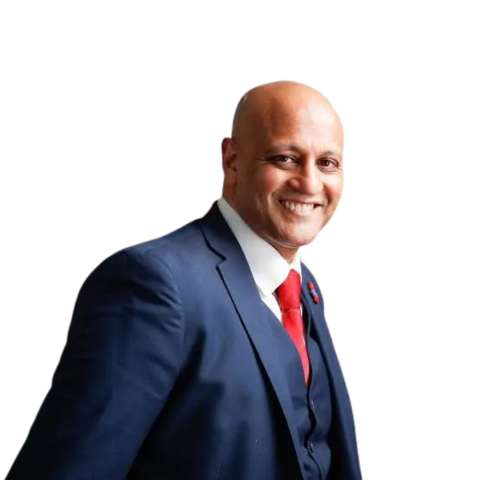
Shakil Butt (FCIPD, FCCA), CEO at HR Hero for Hire & Associate at West Midlands Employers
In the late 80s the concept of a VUCA world was introduced to describe the challenges facing humanity namely the landscape is Volatile, Uncertain, Complex and Ambiguous with change being the only constant. That said, back then, there would be a period of change followed by a pause before the next period of upheaval. We did not realise how good we had it back then.
Post the pandemic, in 2022, the Collins Dictionary word of the year was Permacrisis, to reflect the new reality of crisis, not just one after the other, but layered on top of each other whether the cost of living, financial markets, homelessness, refugees, mental health, austerity, labour market shortages, AI replacing jobs, geopolitics … the list goes on.
No surprise then that leadership has increasingly become more difficult to navigate in this space. The mantra of do more, do it with less and do it faster has only added to broken Britain. No leader truly knows what they are doing, how could they. Most are doing the best they can. Great leaders recognise they don’t have all the answers in this context and look to their teams for different thinking to come up with better ways forward.
That is only possible if you have diverse thinking around the decision-making table otherwise ‘group think’ is the result. Today’s reality is, whatever got a leader to this point in their career; their skills, experience, qualifications will not take them further alone. This is underscored by the quote from Steve Jobs who said “It doesn't make sense to hire smart people and then tell them what to do. We hire smart people so they can tell us what to do”.
Sounds straight forward but to achieve this a leader needs to address WIFM. What’s in it for me. Why should anyone contribute ideas and solutions to their organisation. To answer this, we need to go back to a very old management model, Maslow’s Hierarchy of Needs, 1954. Maslow suggested certain needs have to met for a person to self-actualise and be the best version of themselves, something surely every leader wants from their workforce. After physiological and safety needs, love and belonging is an essential need to build self-esteem so a person can actualise. A person feels like they belong when they feel valued, dignified, seen, heard and accepted without having to conform to fit in. That’s when a person is going to be invested in the organisation and this surfaces in the language being used. The organisation becomes my organisation. The team becomes my team. The strategy becomes our strategy.
For leaders to really tap into their people they need to be more inclusive which means being honest with themselves about their own echo chambers. Who are the people they spend time with that shape and influence their perspective. Echo chambers in a social media world help to reinforce our thinking due to the algorithms showing us more of the same content whether that is on LinkedIn, Facebook, Instagram, TikTok etc whilst certain platforms also proliferate certain divisive narratives. To really appreciate difference and be more inclusive it is about getting out of your own way and seeing people as people and being okay with diversity.
Going beyond echo chambers is the first step but to really connect with the workforce, leaders need to create inclusive cultures where people have psychological safety, so they can speak up without fear of reprisal and consequence. Leaders need to be brave themselves and have the difficult inclusive conversations, tackling behaviours that undermine dignity at work, role modelling the culture they want to cultivate.
It is not easy to have a difficult inclusive conversation with many barriers that can get in the way. Usually, the difficult inclusive conversations are avoided due to fear of getting it wrong and making the situation worse. There is also the increased pressure to manage not only your emotions but the emotions of the other person who might become defensive. It is important to consider the power dynamics involved as a senior leader is not on the same footing as someone who is comparatively junior and this can show up during a difficult inclusive conversation. Identity is another factor that can shape difficult inclusive conversations with each party having their own lived experiences, trauma and baggage they might bring into the conversation making it that more difficult. To be successful it is critical to balance intent and impact, staying focussed on what you are trying to achieve. Despite these barriers the alternative is silence which means complicity and consent for behaviours to continue.
As a framework to have a difficult inclusive conversation there are several things a leader can do.
- Preparation: Don’t go into a conversation on a whim but be prepared, knowing what you want to say and the message you want to give.
- Psychological safety: Make sure the conversation feels safe for all parties which could be the tone of voice, the location, reassurances around confidentiality and taking a pragmatic approach.
- Stay curious: Remember you only know what you already know and there is always so much more to know so stay open minded and non-judgemental.
- Really listen: Too often we are listening to respond, meaning waiting for an opportunity to answer back rather than hearing what’s being said and reflecting.
- Accountability: Own your bias and baggage. Consider how it is shaping your thinking and how it might show up in the conversation.
This is not a guaranteed recipe for success and every difficult conversation around inclusion will be different, so this framework needs to be adapted so it is helpful.
Finally, it is important to remember, inclusive leaders show up in the small everyday actions and behaviours not the big grandstanding showpieces. To really get the workforce behind you as leader, you need to demonstrate you are behind them and we won’t just navigate the complex world ahead maybe, just maybe, we can build a better inclusive world as our legacy.
