Stronger Together: Strengthening local Government through regional collaboration
Posted on: 24/07/2026
News
Rebecca Davis outlines why collaboration is local government’s greatest strength – And how regional owned and led organisations have never been more important.
 By Rebecca Davis, Chief Executive at West Midlands Employer
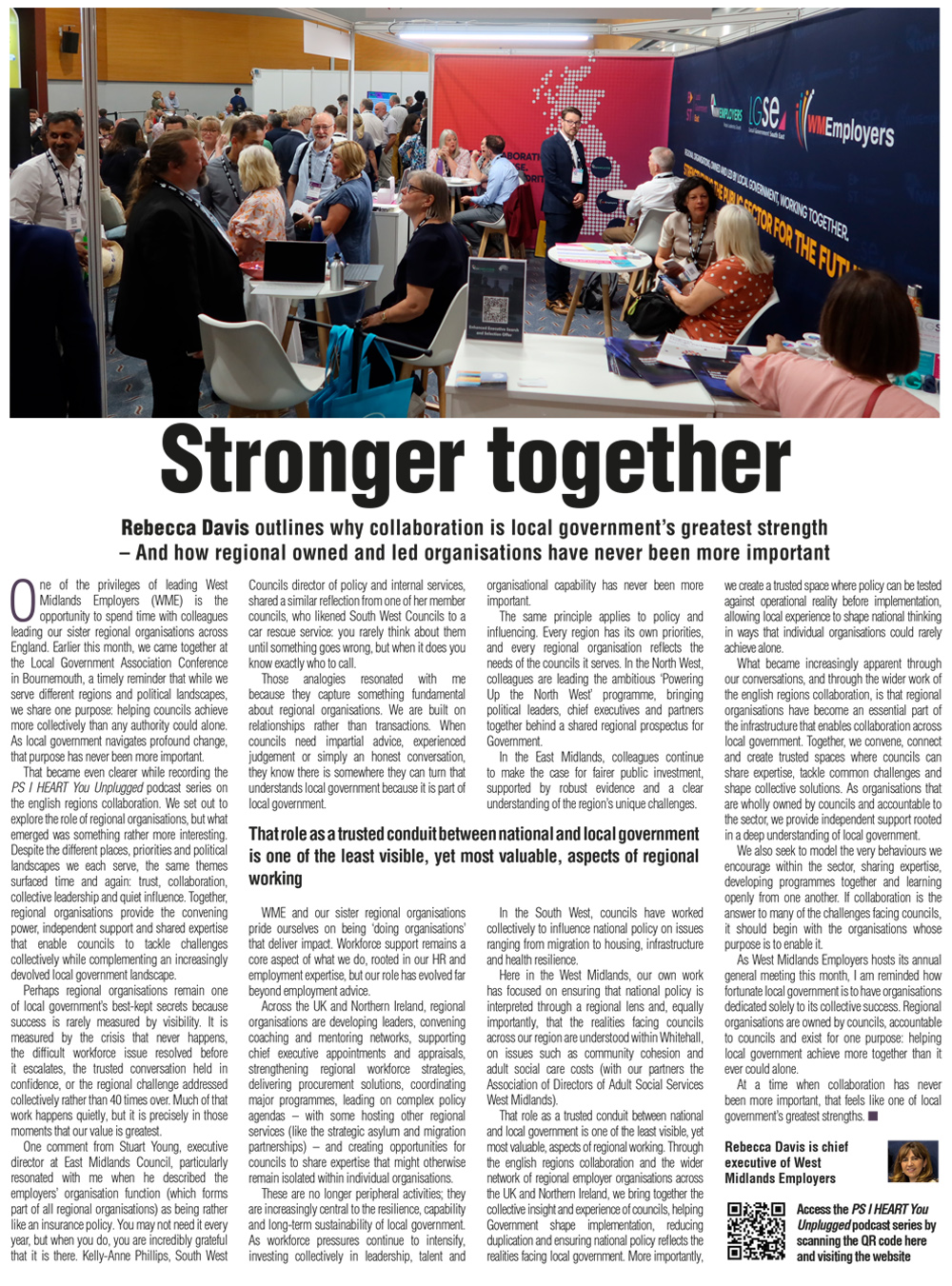
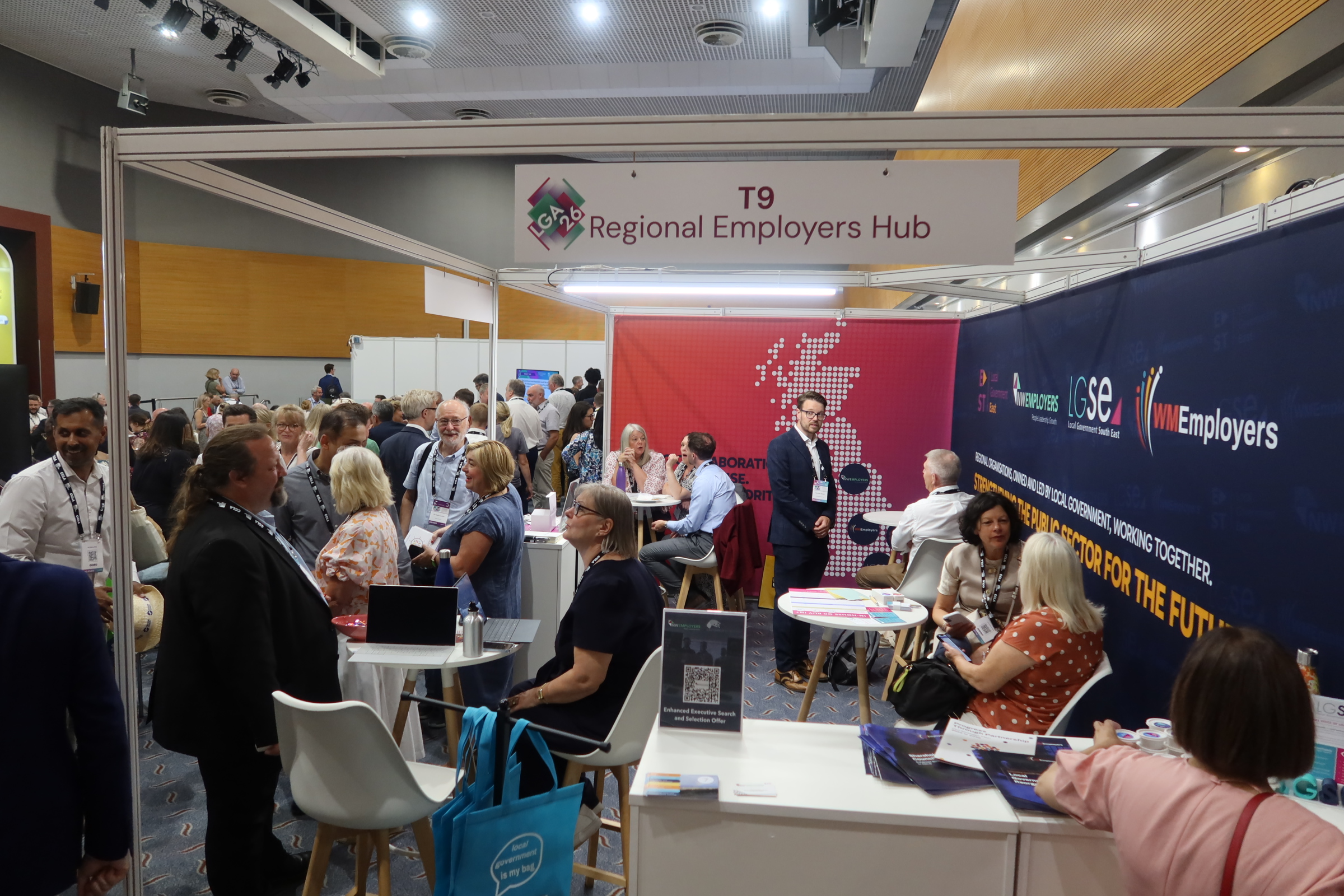
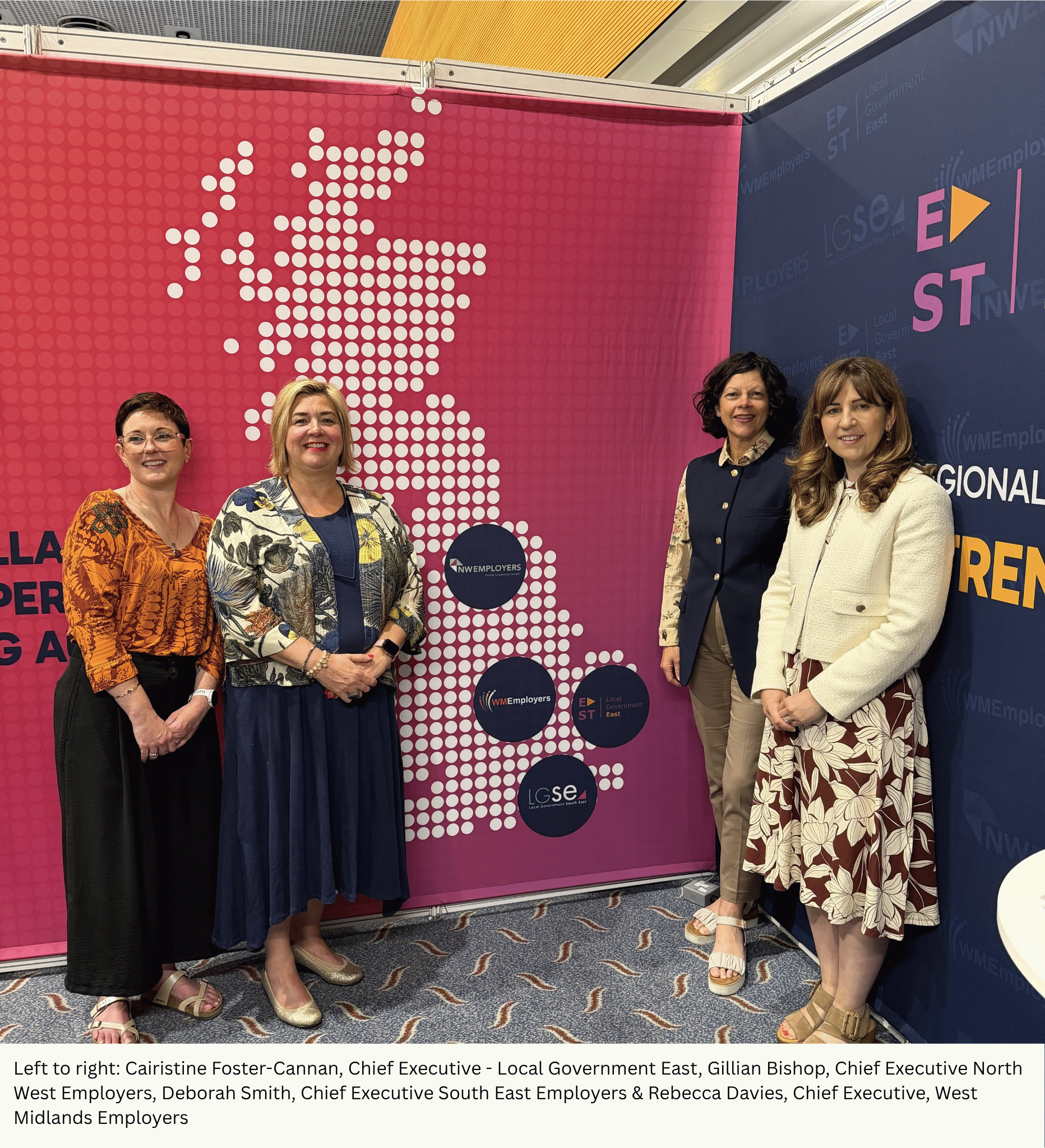
One of the privileges of leading West Midlands Employers (WME) is the opportunity to spend time with colleagues leading our sister regional organisations across England. Earlier this month, we came together at the Local Government Association Conference in Bournemouth, a timely reminder that while we serve different regions and political landscapes, we share one purpose: helping councils achieve more collectively than any authority could alone.
As local government navigates profound change, that purpose has never been more important. That became even clearer while recording the PS I HEART You Unplugged podcast series on the English regions collaboration. We set out to explore the role of regional organisations, but what emerged was something rather more interesting. Despite the different places, priorities and political landscapes we each serve, the same themes surfaced time and again: trust, collaboration, collective leadership and quiet influence. Together, regional organisations provide the convening power, independent support and shared expertise that enable councils to tackle challenges collectively while complementing an increasingly devolved local government landscape.
Perhaps regional organisations remain one of local government's best-kept secrets because success is rarely measured by visibility. It is measured by the crisis that never happens, the difficult workforce issue resolved before it escalates, the trusted conversation held in confidence, or the regional challenge addressed collectively rather than 40 times over. Much of that work happens quietly, but it is precisely in those moments that our value is greatest.
Those analogies resonated with me because they capture something fundamental about regional organisations. We are built on relationships rather than transactions. When councils need impartial advice, experienced judgement or simply an honest conversation, they know there is somewhere they can turn that understands local government because it is part of local government.
WME and our sister regional organisations pride ourselves on being ‘doing organisations' that deliver impact. Workforce support remains a core aspect of what we do, rooted in our HR and employment expertise, but our role has evolved far beyond employment advice.
Across the UK and Northern Ireland, regional organisations are developing leaders, convening coaching and mentoring networks, supporting chief executive appointments and appraisals, strengthening regional workforce strategies, delivering procurement solutions, coordinating major programmes, leading on complex policy agendas – with some hosting other regional services (like the strategic asylum and migration partnerships) – and creating opportunities for councils to share expertise that might otherwise remain isolated within individual organisations.
These are no longer peripheral activities; they are increasingly central to the resilience, capability and long-term sustainability of local government. As workforce pressures continue to intensify, investing collectively in leadership, talent and organisational capability has never been more important.
The same principle applies to policy and influencing. Every region has its own priorities, and every regional organisation reflects the needs of the councils it serves. In the North West, colleagues are leading the ambitious ‘Powering Up the North West' programme, bringing political leaders, chief executives and partners together behind a shared regional prospectus for Government.
In the East Midlands, colleagues continue to make the case for fairer public investment, supported by robust evidence and a clear understanding of the region's unique challenges.
In the South West, councils have worked collectively to influence national policy on issues ranging from migration to housing, infrastructure and health resilience.
Here in the West Midlands, our own work has focused on ensuring that national policy is interpreted through a regional lens and, equally importantly, that the realities facing councils across our region are understood within Whitehall, on issues such as community cohesion and adult social care costs (with our partners the Association of Directors of Adult Social Services West Midlands).
That role as a trusted conduit between national and local government is one of the least visible, yet most valuable, aspects of regional working. Through the English regions collaboration and the wider network of regional employer organisations across the UK and Northern Ireland, we bring together the collective insight and experience of councils, helping Government shape implementation, reducing duplication and ensuring national policy reflects the realities facing local government. More importantly, we create a trusted space where policy can be tested against operational reality before implementation, allowing local experience to shape national thinking in ways that individual organisations could rarely achieve alone.
What became increasingly apparent through our conversations, and through the wider work of the english regions collaboration, is that regional organisations have become an essential part of the infrastructure that enables collaboration across local government.
Together, we convene, connect and create trusted spaces where councils can share expertise, tackle common challenges and shape collective solutions. As organisations that are wholly owned by councils and accountable to the sector, we provide independent support rooted in a deep understanding of local government. We also seek to model the very behaviours we encourage within the sector, sharing expertise, developing programmes together and learning openly from one another. If collaboration is the answer to many of the challenges facing councils, it should begin with the organisations whose purpose is to enable it.
As West Midlands Employers hosts its annual general meeting this month, I am reminded how fortunate local government is to have organisations dedicated solely to its collective success. Regional organisations are owned by councils, accountable to councils and exist for one purpose: helping local government achieve more together than it ever could alone.
At a time when collaboration has never been more important, that feels like one of local government's greatest strengths.
---------------------------------------------------------------------------------------------------------------------------------------------------------------
Article originally featured in The MJ