You can teach leadership. But how do you know you're ready to lead?
Posted on: 14/10/2026
Thought Leadership
Strong leadership goes beyond technical expertise. Vic Allison explores how The Tri-Sector Challenge places participants from across public services in charge of a fictional local authority, where they navigate competing priorities and difficult decisions. For participants, it builds confidence and partnership-working skills. For organisations, it develops leaders who can see the wider picture and work effectively across sectors.
Vic Allison, Joint Chief Executive, Malvern Hills and Wychavon District Councils

One of the challenges we face in local government is we often promote people because they are technically very good at what they do. Then, almost overnight, we expect them to be good leaders too.
But the skills that made someone an excellent accountant, planner or housing professional aren't necessarily the skills they need when they become responsible for leading others.
Suddenly, the job requires diplomacy, judgement and strategic thinking. It means knowing when to make a decisive call and when to pause and reflect. It requires an ability to see beyond your own service and understand the bigger organisational picture.
We can teach techniques for doing those things. But there is a limit to what anyone can learn about leadership in a classroom environment. At some point, you have to experience what it feels like to lead and ideally that won’t be the first time you step into a senior role.
That is where the West Midlands Employers Tri-Sector Challenge offers something different.
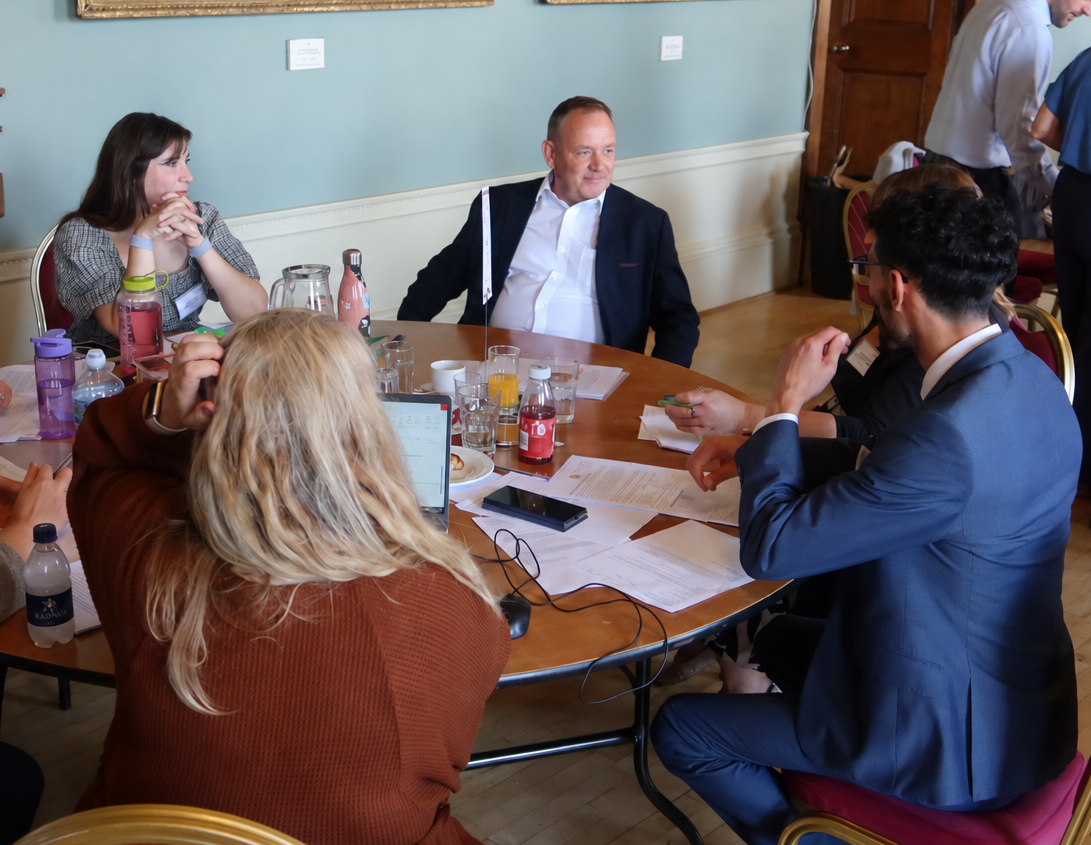
The Challenge brings together teams from local government, emergency services, housing and health to work on real-world issues, putting them in charge of a fictional local authority. Participants become its senior management team and are faced with competing priorities, difficult relationships and unexpected problems.
And there is nobody else to ask.
You can't say, "I'll check with the Director." You can't escalate it to the Chief Executive. For the purposes of the exercise, you are the senior team. The buck stops with you.
That can initially be daunting, but it can also be incredibly empowering.
For perhaps the first time, participants experience being in the position to shape conversations. They get a taste of the responsibility of senior leadership and importantly what setting direction, influencing what happens and involving other people in the conversation brings.
Through role play, teams may find themselves facing an unhappy elected member, partner or stakeholder because of something they have decided. They have to manage the relationship, respond and keep moving forward. They then receive feedback on their performance.
That process of deciding, experiencing the consequences and reflecting on what happened, is difficult to recreate through traditional training. There is a significant gap between theory and reality.
For local government employees, the benefits are considerable. Councils increasingly work with a range of partners to address social, economic, and environmental challenges. Whether delivering regeneration projects, supporting vulnerable residents or driving economic growth, success often depends on effective collaboration across sectors.
The Tri-Sector Challenge provides a unique opportunity for participants to develop these partnership-working skills in a practical setting.
So, participants have to ask different questions. Who else needs to be involved? What matters to them? How do we influence someone when we don't manage them? How do we find common ground without avoiding the difficult decisions?
There is also freedom in a simulation that everyday work doesn't always provide. Participants can test ideas, be creative, get something wrong and learn from it.
We've sent people at very different stages of their careers, from talented junior employees to aspiring Heads of Service. That's deliberate. The Challenge isn't only about preparing someone for their potential next promotion. It gives people a chance to find out whether senior leadership is something they actually want.
That matters to councils. Recruitment is challenging, so developing and retaining our own talent is essential. We need people who understand public service and our organisations, but who aren't constrained by how things have always been done.
For me, that is where the real value of the Tri-Sector Challenge lies.
Someone might return with a greater appreciation of the pressures senior colleagues face. They might discover an appetite for leadership they hadn't recognised before. They might have more confidence to influence a partner, question an established approach or put forward an idea.
And if the Challenge leaves them thinking, “I don't want to stay in my lane, I can see a better way of doing things” then we need to respond to that too.
Because there is little point giving talented people a taste of leadership and encouraging them to think differently, if we don't then show leadership ourselves by giving them opportunities to put into practice what we have inspired them to do.
Congratulations to this year’s winners of the Tri-Sector Challenge 2026: Malvern Hills and Wychavon District Council
View the highlights video below to experience this year’s Trisector Challenge, visit our playlist to view and hear from individuals who have experienced the challenge and from volunteers.
Interested in participating or volunteering in 2027?
Hear the one word participants used to describe the challenge!