From the audience to the stage: greatest gain, not least pain
Posted on: 11/11/2026
Thought Leadership
Not deciding is still a decision. After choosing redundancy following 18 years in the NHS, Ashleigh Shatford explores choosing the greatest gain rather than the least pain. She shares how coaches and mentors can help people focus on what matters most, navigate difficult choices and embrace change. At The Pivot, she’ll share her framework for finding clarity and moving forward.
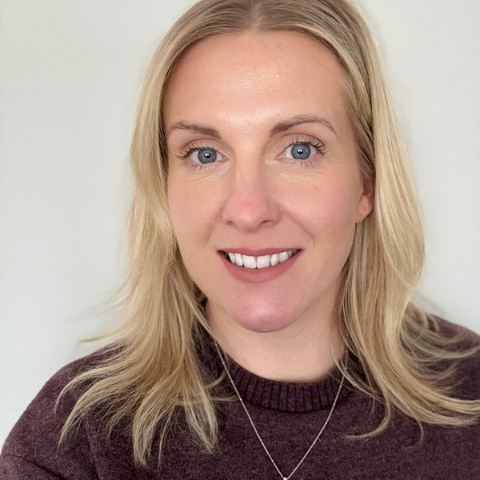
By Ashleigh Shatford, Founder of The Positivity Compass and a former NHS Programme Director
Add Ashleigh on LinkedIn
"If I wasn't in the NHS, what could I do?"
That was the question in my mind when I sat in the audience at last year's West Midlands Employers Coaching Conference, Coaching Beyond the Storm, as an NHS coach and Programme Director.
I was in my own storm.
Eighteen years into my NHS career, I was navigating the National Redundancy Programme, with one big decision in front of me. Stay, or go.
The NHS had been a huge part of my adult life. It was woven into my identity. But that question had become a barrier. Over the years, it kept coming back. And every time it did, my thinking stopped dead. I didn't believe there was anything else I could do.
I had to work through it. Because if I didn't, that belief, without evidence, would keep making my decision.
The crossroads arrived and I chose redundancy. Not an easy decision, but a considered one.
This year, I'm coming back as a keynote speaker and the founder of The Positivity Compass. And this year's theme? The Pivot. You couldn't make it up.
Choose Your Hard
When we face a hard decision, most of us default to one question, often without realising it: what is the easiest and least painful option right now?
It makes sense. In the moment, it looks like the road to a peaceful life. But the option that hurts least now seldom hurts least in the long run.
So, I did the work, and concluded…
Staying is a hard decision. Moving is a hard decision. Not deciding is also a decision, it just hides better. There's no option without hard. There's only the hard you choose.
The framework I used to make my decision centres on one thing: what is important to you. When that's clear, the question shifts from "what gives me the least pain now?" to "what gives me the greatest gain towards the life I want?"
Same decision. Completely different question. And it's that reframe that makes the hard and uncomfortable feel purposeful, rather than a burden.
Why this matters for the people you coach
Understandably, people struggle with change. But in the public sector it happens so often that the discomfort becomes a way of life. Many of us chose the public sector because it felt secure, yet management of change is constant, especially in commissioning organisations. Stability is the illusion. Change is the reality.
In Solve for Happy, Mo Gawdat describes unhappiness as the gap between what we expect from life and the reality. During organisational change, that gap can widen.
When someone is in that gap, everything can feel like it's being done to them. Part of our role as coaches and mentors is helping them see the options for what they are and take agency where they have it. Not everything is in their control, but their response is.
A question to take into your next conversation
You don't need a framework to start. Next time a coachee is weighing up a hard decision, try asking:
"Which option gives you the least pain right now? And which gives you the greatest gain towards the life you want?"
If the answers are different, that's where the real conversation starts.
And coaches, ask it of yourself too. You carry a lot: your clients' change, your organisation's change, and your own.
What I'll be sharing on 23rd November
At The Pivot, I'll share the framework I used to make my own hard decision. It's the same one I used to support many colleagues in my previous organisation through theirs.
And they didn't all choose the same thing. They chose a range of different outcomes, including staying. That's the point. This isn't a tool for leaving. It's a tool for clarity, so the decision you make is the right one for you, grounded in what you value. A compass.
One colleague used it and knew the management of change ahead would bring deep discomfort. But what staying could give them aligned entirely with what they valued. They chose to stay. Their roadmap looked completely different to mine.
The session is part keynote, part workshop. You'll leave with something you can use on yourself on Monday morning, and with your clients the week after.
The symbol behind The Positivity Compass, the Vegvisir, carries the words "No matter the storm, you will find your way." A year on, I've found mine. I'd love to help you, and the people you coach, find yours.
Join us at the Public Sector Coaching and Mentoring Conference, The Pivot, on Monday 23 November in Birmingham.