Leadership: Still a contact sport. Now unmistakenly a team one.
Posted on: 12/03/2026
Thought Leadership
Leadership still carries weight. The pressure and scrutiny haven’t eased. What has changed is the belief that one person can carry it alone. In this article, Matthew Hotten challenges the myth of the heroic leader and argues that modern public sector leadership depends on collective performance. Drawing on the West Midlands Tri-sector Challenge, he explores why leadership must move within teams, especially under pressure, and why organisations must reward it accordingly.
 By Matthew Hotten, Senior Consultant Organisational Development, Leadership and Learning at West Midlands Employers
Modern Leadership Without the Script Series: Article 2
Leadership: Still a contact sport.
Now unmistakenly a team one. Leadership has always been a contact sport.
You don’t lead from the sidelines. You feel the collisions, the pressure, the noise. The moments where decisions land on real people with real consequences.
That hasn’t changed. What has changed is the myth that leadership is something you do alone. For a long time we’ve been quietly wedded to the idea of the heroic leader. To some extent we’re still shaped by stories of Shackleton on the ice, Churchill at the dispatch box, Jobs on the keynote stage – leaders who carried the moment by themselves. The person at the top of the tree who sees what others can’t and decides what others won’t.
It’s a compelling story but it’s also increasingly untrue.
Modern leadership in the public sector is less about individual brilliance and more about collective performance. Less solo act, more ensemble. That shift matters for the next generation of leaders stepping up and stepping forward. Many of them are being promoted in organisations that talk about teamwork and collaboration, while subtlety rewarding speed, certainty and individual decisiveness. They feel that contradiction immediately.
They’re told that leadership is about empowerment, then watched closely to see how quickly they personally take charge. They are encouraged to be inclusive, then quietly judges on whether they look like they have everything under control.
So they learn fast.
They learn that asking for help can look like weakness. That slowing down can feel risky. That being the one with all the answers still carries status. If collaboration is what we claim to value, where is it genuinely recognised and rewarded?
Complex, politically sensitive decisions don’t yield to lone heroes and systems under pressure don’t respond well to individual saviours. The reality of public leadership – competing priorities, incomplete information, conflicting values, time pressure, scrutiny – demands something else entirely.
It demands teams. Real ones.
Not groups of capable individuals waiting for direction. Teams that think together. Challenge each other. Make sense of ambiguity collectively. Hold their nerve when the room gets uncomfortable. This is where the idea of leadership as a team sport stops being a metaphor and starts being a necessity.
It’s here where ego shows up again. Not loudly but in disguise.
The ego that says “I should be able to handle this myself.”
The ego that says “If I pause, someone else might step in.”
The ego that mistakes control for competence.
For experienced leaders, ego can harden into habit. For emerging leaders, it often shows up as imitation. They copy what they think leadership looks like. What they’ve seen recognised and rewarded. The results are predictable.
Teams of talented people who don’t quite function as teams under pressure. Meetings full of smart contributions that don’t quite connect. Decisions that feel owned by everyone and no one. Leaders carrying more than they should because they think that’s the job and when pressure rises, does leadership in our teams genuinely move?
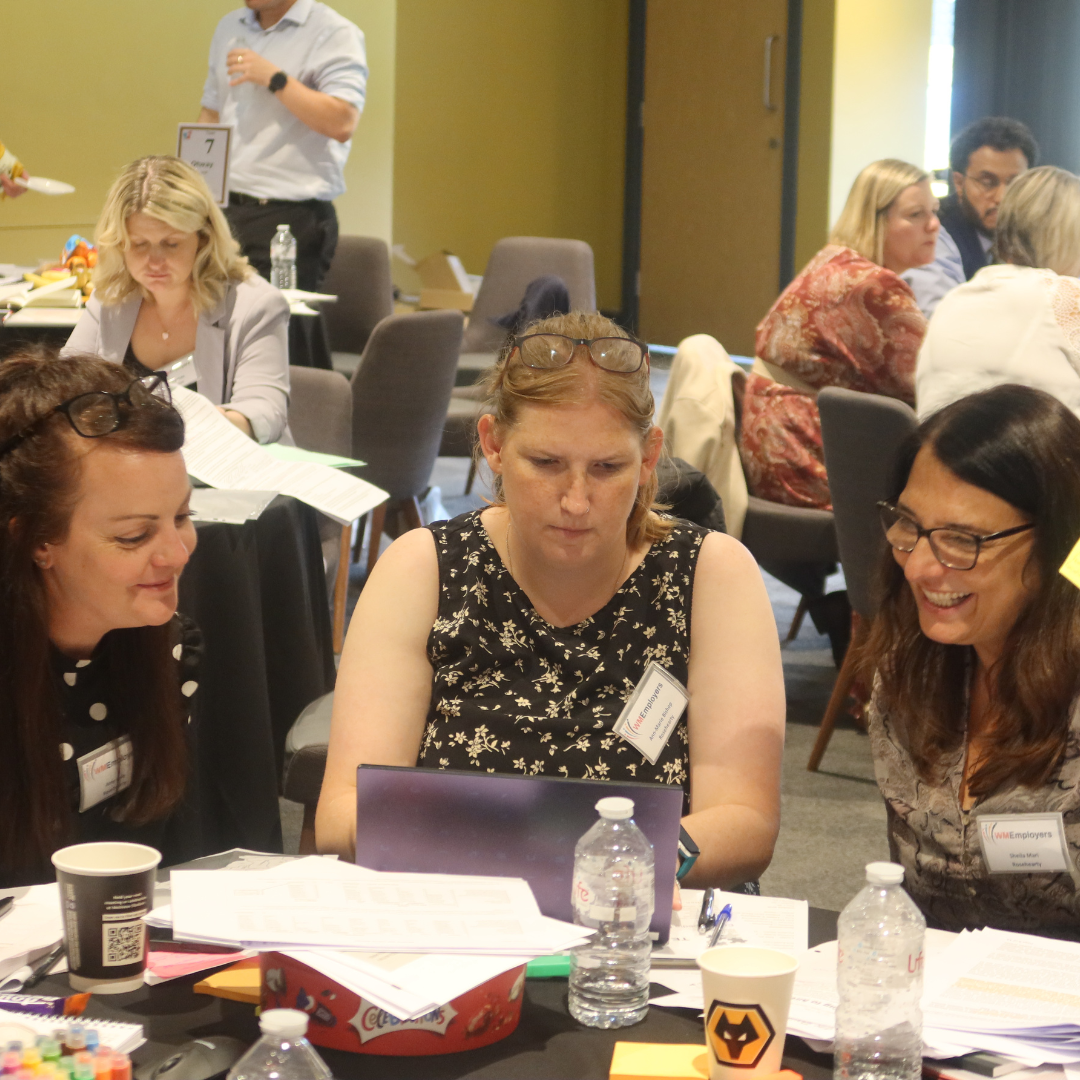
Every year, I see this played out vividly at the West Midlands Tri-sector Challenge.
Put six emerging leaders into high-pressure, politically charged scenarios. Give them incomplete information, a couple of red herrings, time pressure and public scrutiny and watch what happens.
The instinct to go solo surfaces quickly. Someone takes charge. Others defer. People retreat into functional silos. The ‘leader’ starts to absorb everything. Then, sometimes, they notice something.Performance improves when leadership moves around the team. When decisions are shaped collectively. When challenge is welcomed rather than managed away. When no one person tries to hold the whole thing.
The most effective teams don’t lack leadership; they’re packed full of it!
That’s the lesson new leaders need to learn early, before the habits set.
Leadership development isn’t just about building individual capability anymore. It’s about learning to lead together. How to disagree productively. How to share authority without abdicating responsibility. How to hold each other to account without slipping into comfort or conflict.
Crucially, it’s having the opportunity to practise this safely because the real world rarely offers rehearsal space.
That’s why events like the West Midlands Tri-sector Challenge matter. Not as test to pass but as places where emerging leaders can see how they really show up under pressure and how differently things go when leadership becomes a team sport rather than a solo performance.
So yes, leadership is still a contact sport. You still feel the impact. You still carry the weight and you must step forward when it counts. But if we’re serious about preparing the next generation of public sector leaders, we need to be equally clear about something else.
Leadership is a team sport and it always has been.
So go one then. Prove it.
Not by how strong your leadership feels on its own, but how well it connects, invites and multiplies itself through others.
Because the leaders who will thrive next aren’t the ones who can do it all.
They’re the ones that never try to.
Bring your team to the Tri-sector Challenge 2026 this September.
Six leaders. Real pressure. Incomplete information. And nowhere to hide.
The 2025 highlights video below gives a flavour of what happens when teams stop performing as individuals and start leading together.
To find out more and secure your place, visit our What’s On page